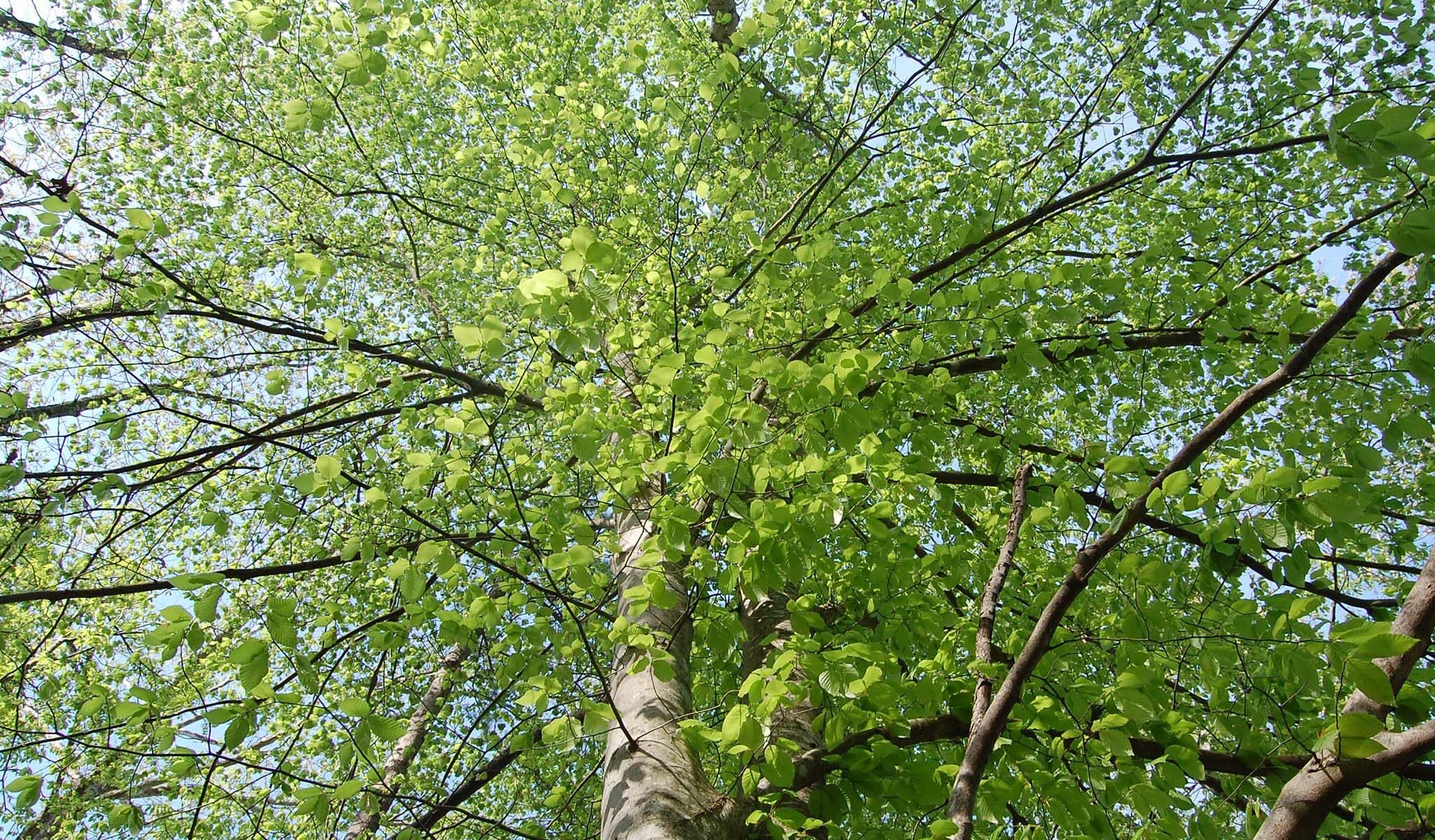
American Beech
Fagus grandifolia
- Plant family
- Fagaceae
- Growing zone
- 4-9
- Height
- 50-70 ft.
Bloom description: The reddish-male flowers hang on a slender stalk, while the yellowish-female flowers hang at the end of a short stalk. The flowers are not an attraction of the tree, but they do give rise to the fruit, which is a bur with 2, 3-sided nuts inside it. The fruit can be collected from October-November.
Leaf type: The light-green, oval leaves have blunt serrations and turn a beautiful gold in fall. The lower leaves remain attached during winter and fade to a nice wheat color. The leaves remain attached until the new growth emerges in the spring.
Garden uses: Best used as a canopy tree. Although growth is quite slow, this medium-sized tree is worth it. The attractive gray bark and light-green leaves are paired nicely with the low, horizontal limb structure. The tree prefers a fertile, moist soil in full to partial sun.
Wildlife benefits: The nuts provide food for quail, wood ducks, and numerous other species of birds and small mammals.
Listen
Show transcript
DR. COMPTON’S BEECH TREES TRANSCRIPT
NARRATOR: Crystal Bridges horticulturalist Cody George discusses the legacy of Dr. Neil Compton, who planted many of the Beech trees that are found today on the south side of the museum.
CODY GEORGE: Throughout the south side of our forest, you'll notice a lot of American Beech trees. These Beech trees were presumed to be planted by Dr. Neil Compton, who did own the property. We do have evidence that Dr. Compton did purchase 750 saplings of American Beech trees. So these trees are estimated between 50 to 60 years, so it would make sense that these trees did come from Dr. Compton.