Photography by Edward C. Robison III
Siberian Tiger
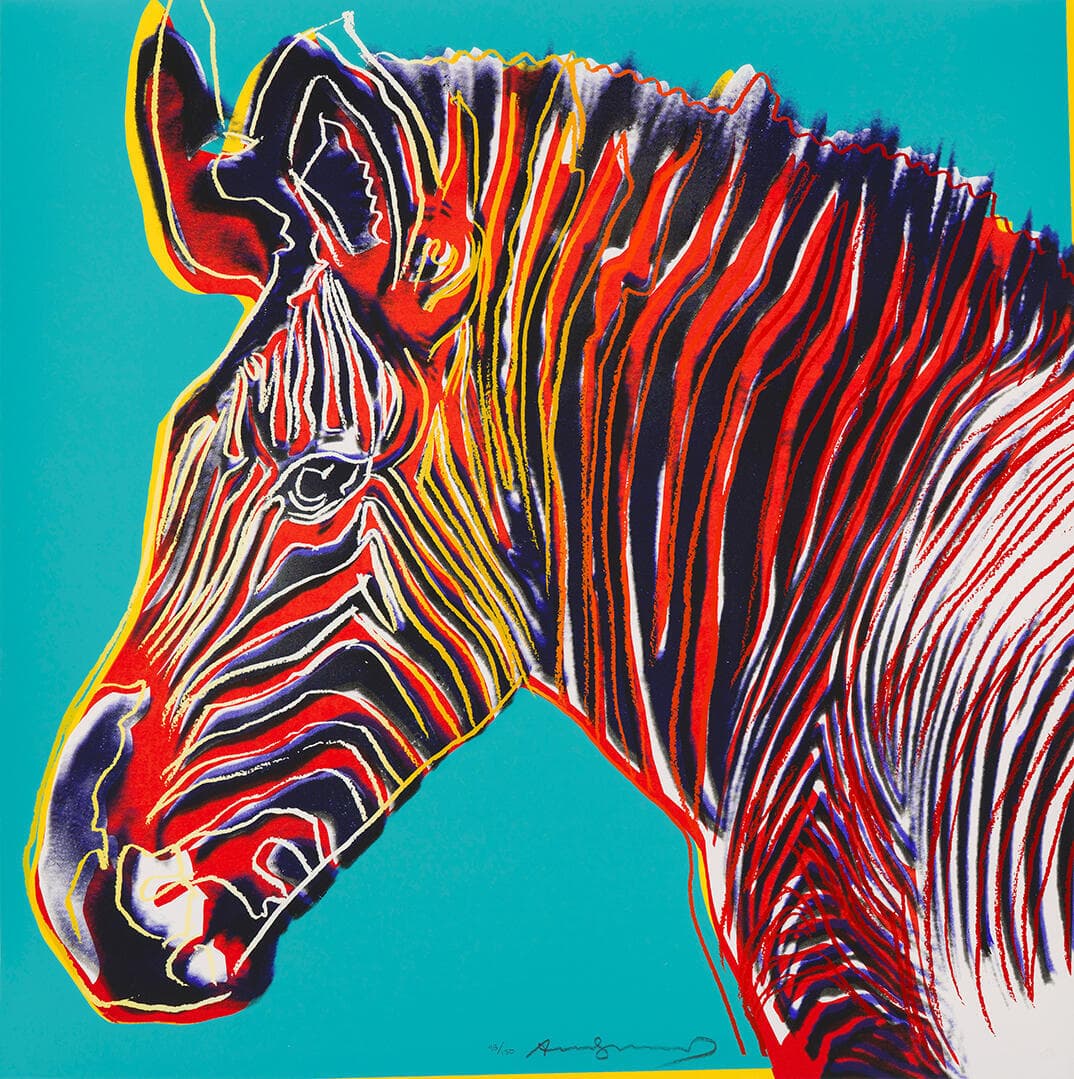
It may seem surprising that Andy Warhol represented animals in these works, when he is much better known for depicting celebrities. Through his use of large images and bright colors, Warhol turned these endangered animals into icons.
Warhol’s desire to depict endangered species came from conversations he had with art collectors about environmental issues. He made 150 editions of these ten screen prints, 100 of which he donated to wildlife conservation organizations with the intention that they be auctioned off in order to raise money for their causes.
There is an added significance to Warhol making prints of endangered animals. In his screen prints, which were based on photographs of disappearing species, the source photographs themselves disappear, replaced by layers of colorful ink. And yet, because of the ability of these printed images to be reproduced, Warhol’s series also symbolically “created” 1,500 new animals.
This artwork's face covers about 214× the area of a tennis ball.Drawn to the same scale.