Photography by Edward C. Robison III
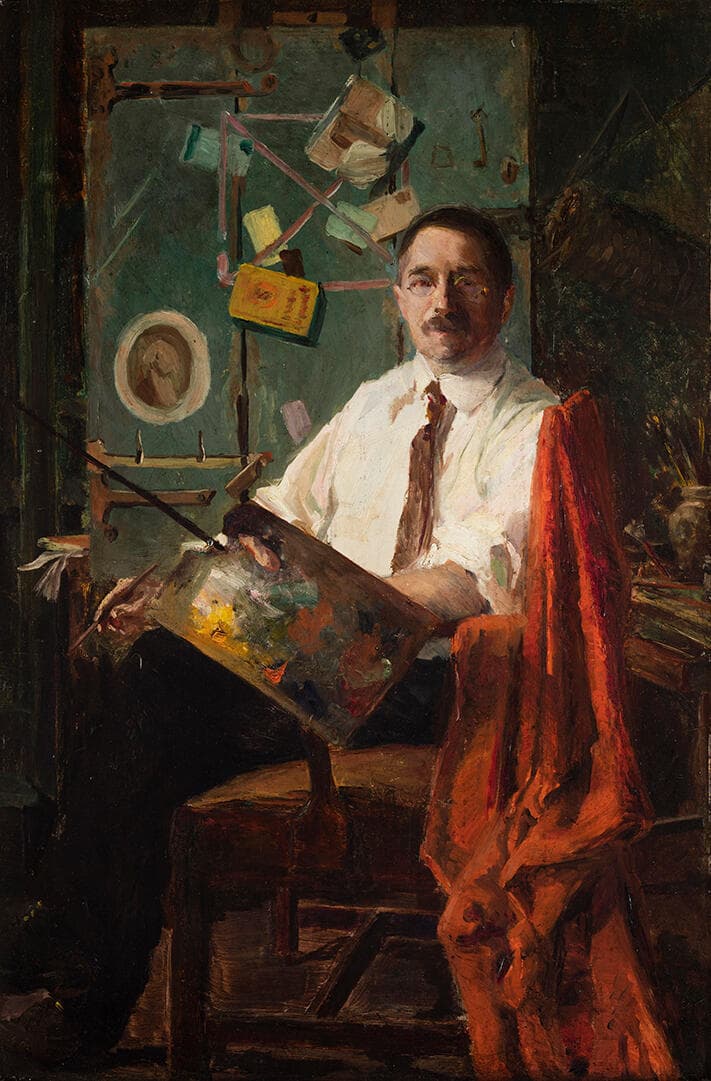
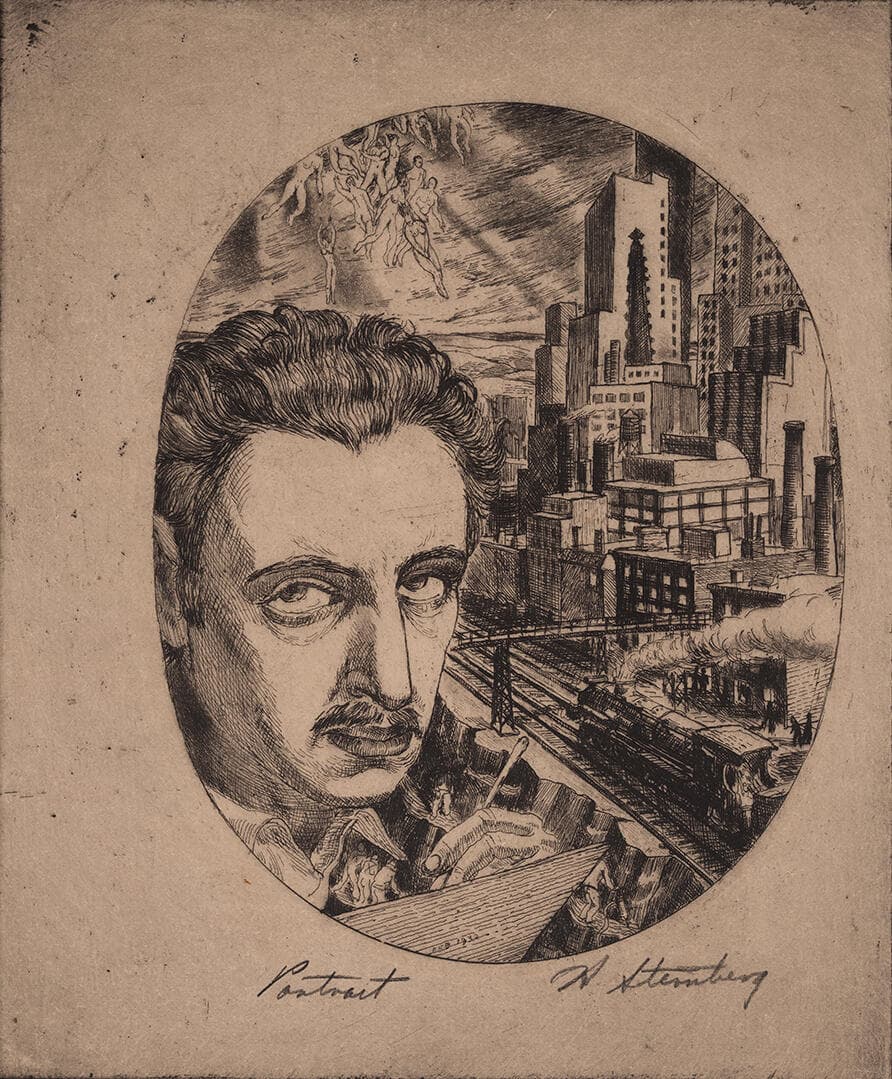
Self-Portrait
A barrel-chested figure stands confident in the frame, with brushes in a firm grasp, a corduroy barn jacket, and a billowing pipe. In this self-portrait John Steuart Curry presents his ideal public self, but this depiction masks his well-known and intense self-criticism. Although he believed portraits must aim to “show the personality and inner meaning of the life before [them],” this artwork shows a self-assured professional rather than his sensitive, inner self.
Behind him, a blurred view of his 1931 George Washington Bicentennial mural depicts laborers at work, and suggests a view into the artist’s studio. The artist often painted self-portraits using a mirror, which explains why the image of the mural is reversed.
Along with Thomas Hart Benton and Grant Wood, Curry is associated with Regionalism, a movement concentrating on local, realistic depictions of American life. By paralleling his own artistic exercise with the work of the mural figures, this native Kansan exemplifies the familiar Regionalist subject matter of American labor.
This artwork's face covers about 176× the area of a tennis ball.Drawn to the same scale.